
An occasional series highlighting a paper of interest, published in the peer reviewed journal of the International Society for Horticultural Science – eJHS/JISHS
DNA methylation is conserved between vegetative propagules in almond (Prunus dulcis Mill D.A. Webb)
https://doi.org/10.1079/ejhs.2026.0007
Authors: William Hazzard, Jonathan Fresnedo-Ramirez, Elizabeth Anderson, Patrick J. Brown, Thomas Gradziel
Editor’s perspective
“This research brings to light a significant physiological challenge in almond cultivation, identifying non-infections bud failure as a dormancy phase necrotic disorder that fails to develop in the spring affecting almond production. While the exact trigger remains elusive, authors explored variation in DNA methylation between epicormic and axillary shoots.”
Renato Paiva, Universidade Federal de Lavras, Brazil. Editor-in-Chief of eJHS
About the author
Who are you and what do you do?
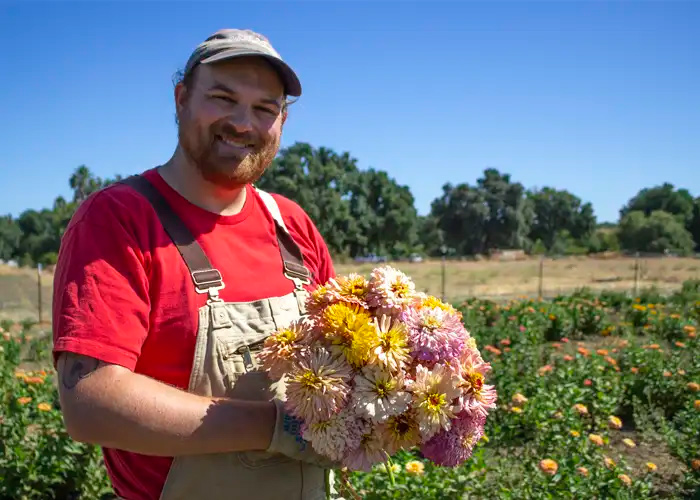
My name is Will Hazzard; I am a PhD Candidate at the University of California, Davis. My dissertation focuses on developing biomarkers to detect non-infectious bud failure in almonds. Additionally, I run a student-led breeding program to produce new varieties of zinnias for organic production, and developing new techniques and strategies for breeding outcrossing crop.
How did you become a researcher – what was your motivation?
Before graduate school, I was a congressional aide in the US Senate working on agricultural policy. However, I soon discovered that I much preferred being in the field and working with researchers than working behind a desk all day. I really enjoyed working with plant breeders and scientists in my job, so I made the pivot to getting my PhD.
About the research
What is the topic of your paper and why is it important?
Non-infectious bud failure is a persistent and existential problem that affects the almond industry. It has been a known problem in the United States, but is becoming more prevalent in other countries with intensive production, such as Australia. Catastrophic collapse was avoided by the discovery of mitigation through epicormics, which we touch on in the paper. However, in order to properly manage this disorder, we need to understand the underlying biology better. The 20th century was about characterizing and pathologizing non-infectious bud failure, but the 21st century will be about discovering its root causes.
What impact has your research had, or what impact do you hope it will have, on the research field or in practice?
My goal is to provide insight into clonally propagated crops, and to make advancements in the understanding of non-infectious bud failure. This has been a problem that has yet to be solved for nearly 75 years, and I hope my research can provide some contribution to it. Additionally, in the broader context, I believe that our understanding of base-pair modifications and epigenetics will be essential in the future to improve clonally propagated crops like tree fruits and nuts.
Can this research be applied in other fields?
These types of epigenetic disorders, or disorders that cannot be detected through differences ins sequencing data, I believe will continue to be an issue in the future. Exploring these areas could have potential applications in the future.
What was the most interesting outcome of this study from your perspective – did anything surprise you?
For me, the most interesting finding was the similarity of methylation across the different locations in California. Changes in DNA methylation are often associated with differences int eh environment. There are nearly 10 degrees of longitude between the northern and southern growing regions of California, and have differences in precipitation and mean summer temperature. When we were forming our hypothesis, we expected to see changes in methylation between the environments, at the very least between the north and southern samples cites. However, they are remarkably similar. We speculated that it’s possible it’s not only the environment, but also observable differences in phenotype that are more correlated with changes in methylation, other that changes in the environment means more than just precipitation and temperature to create observable difference.
What did you enjoy about publishing with the European Journal of Horticultural Science (eJHS)?
I found out about the European Journal of Horticultural Science through my membership to the ISHS. It was really an amazing opportunity to publish in a journal affiliated with the organization. I would also describe the review process as efficient, communicative and expeditious.
Looking ahead
Are there other areas you would like to research and why?
I finish my degree this fall, and I am looking forward to whatever the next step may be. I have a strong passion for working with tree crops. I grew up in Washington State near the apple and cherry orchards, so they have always held a special place for me, and I would love the opportunity to keep working in them. At the same time, it would be amazing to expand my knowledge base to other crops as well.
This article first appeared in the ‘Editor’s Choice‘ series by CABI, the publisher of the ISHS Journal JISHS (formerly eJHS.)