

Effects of branch bearing status and irrigation on pistachio leaf photosynthetic performance
Carlota Bernal Basurco
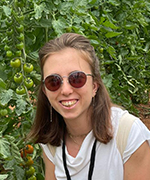
This study investigated the effects of crop load on the photosynthetic performance of pistachio trees subjected to different irrigation regimes during kernel development. The experiment was conducted in Woodland, California, during the summer of 2025. Three irrigation treatments were evaluated: high irrigation, supplying 100% of crop evapotranspiration requirements; medium irrigation, supplying 50% of crop evapotranspiration requirements; and low irrigation, in which only supplemental irrigation was applied.Measurements were taken on reproductive shoots carrying fruit clusters and on vegetative, non-bearing shoots during kernel filling and ripening. Midday stem water potential, gas exchange, A-Ci response curves, stomatal conductance, electron transport rate, photosynthetic capacity and leaf soluble sugar concentration were measured. Plant water status differed clearly among treatments. Trees under low irrigation reached the most negative stem water potential values, particularly in late August, while high and medium irrigation treatments showed similar values, suggesting that the medium treatment may have met actual tree water requirements. Branch bearing status also affected physiological responses. Vegetative shoots showed higher stomatal conductance (gs), maximum electron transport capacity (Jmax) and electron transport rate (ETRa) than reproductive shoots. Under low irrigation, vegetative shoots maintained greater stomatal opening and accumulated more soluble sugars. These responses may support osmotic adjustment and help protect photosynthetic activity during water stress. However, reproductive shoots probably allocated more carbohydrates to developed nuts, reducing the resources available for stress protection. Water stress reduced gs and Jmax, while Rubisco carboxylation capacity (Vcmax) was not significantly affected. This indicates that, within the observed range of water stress, photosynthesis was limited mainly by stomatal closure and restrictions in Jmax rather than by direct damage to the carboxylation capacity. Overall, the findings suggest that vegetative branches are more resilient to water stress than reproductive branches during late kernel development. From a practical perspective, irrigation strategies could potentially be adjusted according to crop load: trees in low-crop years may tolerate greater water reductions, whereas heavily bearing trees could be more sensitive. The study also warns that measurements taken only on non-bearing branches may underestimate irrigation effects on whole tree performance. These results can contribute to more efficient orchard water management.
Carlota Bernal Basurco won the ISHS Young Minds Award for the best oral presentation at the IX International Symposium on Almonds and Pistachios in Spain in May 2026.
Contact
Carlota Bernal Basurco, CEIGRAM, Universidad Politécnica de Madrid, P.º de la Senda del Rey 13, Moncloa – Aravaca, 28040 Madrid, Spain, e-mail: carlota.bernal.basurco@alumnos.upm.es
Vigorous rootstocks and microbial inoculation enhance organic pepper production
Asmita Nagila

Organic pepper production faces challenges due to limited nutrient availability and increasing environmental stresses, particularly drought and heat in Southwest US. Developing sustainable, low-cost approaches that improve crop growth and stress tolerance while maintaining productivity are necessary for the long-term success of organic vegetable systems. This research evaluated two root-centered strategies for improving pepper under organic production conditions: grafting onto vigorous rootstocks and inoculation with beneficial plant growth-promoting rhizobacteria (PGPR). In the first study, the Italian pepper cultivar ‘Mama Mia Giallo’ was grafted onto four pepper rootstocks and grown under contrasting organic fertility regimes. Scions when grafted to rootstocks CM-334 (a Mexican landrace resistant to Phytophthora root rot)and YC-207 (a breeding line developed at Texas A&M) performed well under reduced fertility conditions compared to non-grafted plants. YC-207 showed higher nitrate reductase activity, nutrient utilization efficiency, maintenance of gas exchange activities and lower malonaldehyde content, all of which are tolerance traits to reduced fertilization and natural heat stress conditions in greenhouses. The following study investigated the potential of a commercial PGPR to alleviate water stress in three pepper genotypes. Water deficit significantly reduced plant growth, physiological performance and biochemical activity across all genotypes. However, microbial inoculation partially mitigated water deficit effects by maintaining plant water status, gas exchange activities, ionic balance and antioxidant activities, primarily through modifying root architecture. Responses varied among genotypes, with the jalapeño breeding line Jal46 exhibiting drought tolerance to some extent, while the heirloom cultivar ‘Corne di Toro’ was the most susceptible. Overall, these studies highlight the potential of integrating grafting and microbial inoculation to improve nutrient-use efficiency and stress tolerance in peppers. These approaches offer practical low-cost tools for strengthening the sustainability and profitability of organic vegetable production under organic and low-input conditions.
Asmita Nagila won the ISHS Young Minds Award for the best oral presentation at the X Southeastern and Eastern Europe Symposium on Vegetables and Potatoes in Greece in May 2026.
Contact
Asmita Nagila, Texas A&M University, 1619 Garner Field Rd., Uvalde, TX 78801, USA, e-mail: anagila@tamu.edu
Effects of cold plasma treatment on germination dynamics and early seedling development in common bean (Phaseolus vulgaris L.)
Ovidia Agapie

Ovidia Agapie is a research scientist at the Vegetable Research and Development Station Buzău, Romania. Her research focuses on plant genetic resources, breeding and the evaluation of innovative technologies for sustainable crop production.
The award-winning study investigated the effects of cold plasma treatment on seed germination and early seedling development in common bean (Phaseolus vulgaris L.). Seeds were treated with cold plasma and subsequently evaluated for germination dynamics, germination percentage, seedling vigor and early growth parameters. The results showed that cold plasma treatments of 6-9 minutes were the most effective, accelerating germination and increasing the germination rate after three days from 34.7% in the untreated control to over 60%, while promoting seedling vigor and early growth. The research was carried out within a project funded by the Romanian Ministry of Agriculture and Rural Development (MADR) and supports ongoing efforts to develop sustainable technologies capable of improving crop performance while reducing environmental impact. These findings highlight the potential of cold plasma as an innovative seed treatment technology for sustainable horticultural production.
Ovidia Agapie won the ISHS Young Minds Award for the best poster presentation at the X Southeastern and Eastern Europe Symposium on Vegetables and Potatoes in Greece in May 2026.
Contact
Ovidia Agapie, Vegetable Research and Development Station Buzău, 23 Mesteacănului Street, 120024 Buzău, Romania, e-mail: agapie.ovidia@gmail.com
Optimization of a cost-effective culture medium for mass production of an endophytic antagonistic strain of Aureobasidium pullulans
Giulia Remolif

Giulia Remolif is a PhD student in Plant Pathology at the University of Torino, Italy. Her research focuses on postharvest fruit diseases. Currently, she is investigating alternative control strategies to synthetic fungicides, mainly focusing on biological control. The development of a biocontrol agent (BCA) involves several steps, starting from the screening and selection of effective microorganisms, through to mass production and formulation. An endophytic Aureobasidium pullulans strain, isolated from Italian apples, has shown promising activity against several postharvest pathogens. This study focused on developing a low-cost culture medium for the mass production of the selected strain, using agri-food industry by-products and inexpensive commercial substrates. Sugarcane molasses, apple bagasse and apple peel flour were evaluated as carbon sources, while whey, aquafaba, soy protein isolate and urea were tested as nitrogen sources. A medium containing apple peel flour (35 g L-1) and soy protein isolate (3 g L-1) supported A. pullulans growth comparable to that obtained with the laboratory medium Malt Extract Broth (MEB). Similar growth was also achieved using two independent batches of the selected substrates. The optimized medium was then scaled up in a 2-L laboratory bioreactor. After 48 h, the viable population reached a value comparable to shake-flask cultures. During the process, dissolved oxygen decreased while pH slightly increased. Glucose, fructose, sucrose and proteins were also monitored, revealing their consumption dynamics. Finally, efficacy trials on apple fruit demonstrated that cells produced in the optimized medium retained their antagonistic activity against Colletotrichum sp. and Botrytis cinerea, performing comparably to MEB-grown cells. Overall, this work has demonstrated that agri-food by-products and cost-effective commercial substrates can support efficient BCA production while maintaining biocontrol efficacy, thereby providing a promising basis for industrial-scale application and contributing to waste valorisation and the circular economy.
Giulia Remolif won the ISHS Young Minds Award for the best oral presentation at the VIII International Symposium on Postharvest Pathology in Norway in May 2026.
Contact
Giulia Remolif, Università di Torino, Largo Braccini 2, 10095 Grugliasco, Italy, e-mail: gi.remolif@unito.it
Optimizing transplanting windows to reduce Tuta absoluta losses in commercial processing tomato production in northern Nigeria
Salome Ayekpuo Arewa

In sub-Saharan Africa, the processing industry faces catastrophic losses due to the invasive tomato pinworm (Tuta absoluta), a pest whose development accelerates under high temperatures. To establish practical crop scheduling interventions, this study evaluated how different transplanting periods interacted with the arrival of the pest, final output and fruit quality parameters. Field data were gathered during the 2024-2025 dry season across 31 large-scale commercial blocks in Kaduna State, Nigeria, evaluating three distinct planting intervals: early (November 5-21), mid (November 23-December 7) and late (December 9-19).
Climatic tracking via on-site sensors revealed an increasingly hostile microclimate as the season progressed, with weekly ambient average temperatures climbing to 30.9°C and the vapor pressure deficit reaching a maximum of 3.50 kPa. This intensely arid environment heavily compressed the pest’s lifecycle, leading to devastating consequences for delayed crops. The timing of the initial transplanting exerted an exceptionally strong influence on crop performance (p<0.001). Fields established during the early window achieved a mean yield of 42.8 t ha-1. In contrast, late-transplanted fields suffered a catastrophic yield reduction (82.5%), dropping to a meager 7.5 t ha-1.
The specific developmental stage of the crop at the moment of pest colonization proved critical to final productivity. Infestations occurring at the bloom stage caused severe flower drop, limiting final yields to just 12.6 t ha-1, whereas fields infested post-ripening produced 45.2 t ha-1. Spatial tracking also revealed a notable edge effect, with field borders exhibiting significantly lower output (32.8 t ha-1) than the central core zones (48.8 t ha-1). Meanwhile, raw material processing quality remained stable, as soluble solids (°Brix) did not fluctuate across the temporal windows.
Ultimately, these findings demonstrate that optimizing the initial planting date serves as a powerful, low cost cultural barrier. By completing field establishment before late November, commercial producers can effectively shield the sensitive reproductive phase from peak pest pressure, ensuring stable yields for industrial processing without sacrificing fruit quality.
Salome Ayekpuo Arewa won the ISHS Young Minds Award for the best oral presentation at the XVIII International Symposium on Processing Tomato in USA in June 2026.
Contact
Salome Ayekpuo Arewa, Tomato Jos Farming and Processing Limited, Kaduna State, Nigeria, e-mail: salome@tomatojos.net
Developing resilient tomato seedlings through pre-transplant chilling hardening in controlled environments
Nazmin Akter

Nazmin Akter is a PhD student in the Controlled Environment Agriculture (CEA) Lab in the Department of Plant Sciences at the University of California, Davis, USA, under the supervision of Dr. Laura Cammarisano and Dr. Md. Shamim Ahamed. Her research focuses on developing practical and sustainable stress-hardening strategies to improve transplant resilience and crop establishment in processing tomato production. California produces more than 90% of the processing tomatoes grown in the United States, and successful crop establishment is critical to maintaining productivity, especially during early-spring planting when seedlings are often subject to suboptimal temperatures. Nazmin’s doctoral research aims to develop and validate chilling-hardening protocols that enhance seedling resilience, improve transplant establishment, increase tolerance to post-transplant environmental stress and reduce energy costs associated with nighttime heating in the nursery greenhouse.
Initial studies were conducted to evaluate the effects of exposing tomato seedlings to night temperatures of 12 and 5°C for 10 consecutive nights during the nursery stage. Measurements were carried out on morphological parameters, chlorophyll content, membrane stability, chlorophyll fluorescence, stomatal conductance and root development. The preliminary results showed that chilling temporarily reduced shoot growth and physiological performance, but the seedlings recovered after 10 days under optimal conditions. Seedlings exposed to moderate chilling (12°C) developed longer roots during recovery and maintained a more compact canopy with fewer leaves, characteristics that may improve compatibility with automated transplanting systems and enhance transplant performance.
Nazmin Akter won the ISHS Young Minds Award for the best poster presentation at the XVIII International Symposium on Processing Tomato in USA in June 2026. She also received the Adopt-a-Scientist Travel Award sponsored by The Morning Star Company and the California Tomato Research Institute (CTRI) to attend the symposium.
Contact
Nazmin Akter, Department of Plant Sciences, University of California, Davis, One Shields Avenue, Davis, California 95616, USA, e-mail: nazakter@ucdavis.edu
Comparison of intercepted light per plant canopy between the methods using Monsi-Saeki theory and 3-D depth camera: a case study involving sweet pepper, tomato and strawberry production
Masaru Homma

The amount of sunlight captured for photosynthesis is important for plant growth and function. Plant-intercepted sunlight (IL, MJ m-2) can be calculated by multiplying total daily sunlight (MJ m-2) by fraction intercepted (ILfraction, %). ILfraction can be determined using the Monsi-Saeki theory or the spatial image method. While researchers use these methods concurrently under the premise that they will yield similar ILfraction values, the ILfraction gaps between methods remain unclear. We aimed to compare the ILfraction, IL, and light-use efficiency (total dry matter/cumulative ILs) values obtained using the Monsi-Saeki theory and spatial image method, focusing on tomato, sweet pepper (Capsicum annuum), and strawberry (Fragaria × ananassa) plants grown hydroponically in a greenhouse. Our results reveal large ILfraction gaps between methods, resulting in remarkable IL gaps. ILfraction and IL values obtained using spatial images were consistently lower than those obtained using Monsi-Saeki theory. Monsi-Saeki theory and spatial image methods thus yielded different crop-specific light-use efficiency values, indicating method-dependent differences in photosynthetic ability. Our findings indicate that plant-intercepted sunlight should be calculated by carefully selecting either Monsi-Saeki theory or the spatial image method. Concurrent use of both methods forces researchers to accept misevaluations in ILfraction, IL, and light-use efficiency.
Masaru Homma won the ISHS Young Minds Award for the best poster presentation at the International Symposium on Innovative Technologies and Production Strategies for Smart Greenhouse at IHC2026 in Japan in August 2026.
Contact
Masaru Homma, National Agriculture and Food Research Organization, Tsukuba, 305-8519, Japan, e-mail: homma.masaru868@naro.go.jp
Targeted light treatments as a strategy to boost anticancer alkaloid accumulation in Catharanthus roseus: a comprehensive analysis
Marisa Lourenço

Vertical farming enables precise control of the plant growth environment, creating opportunities not only to increase crop productivity but also to enhance the production of high-value plant compounds. This is particularly relevant for medicinal plants such as Catharanthus roseus, which naturally produces the anticancer alkaloids vinblastine (VLB) and vincristine (VCR). However, these compounds occur at extremely low concentrations in the plant, limiting their production efficiency. In this study, we investigated whether targeted ultraviolet (UV) radiation could be used to enhance anticancer alkaloid production in three C. roseus cultivars without compromising plant biomass. Two complementary approaches were evaluated: UV-A applied during the production cycle and short end-of-production UV-C treatments. The response to UV-A was strongly cultivar-dependent, with ‘Cora Red’ showing the greatest response. Four hours of daily UV-A exposure maximized anticancer alkaloid production in this cultivar, increasing the yield of VLB and VCR per plant 2.3-fold. In contrast, end-of-production UV-C promoted VLB and VCR accumulation across all three cultivars, with a 60-min treatment increasing anticancer alkaloid yields without compromising biomass. Both UV strategies were associated with increased lipid peroxidation, while total antioxidant capacity remained largely unchanged, suggesting that mild UV-induced oxidative stress may be associated with alkaloid elicitation. Further work is required to establish the underlying signalling mechanisms.
Marisa Lourenço won the ISHS Young Minds Award for the best oral presentation at the II International Symposium on Advances in Vertical Farming at IHC2026 in Japan in August 2026.
Contact
Marisa Lourenço, GreenUPorto – Faculdade de Ciências da Universidade do Porto, Rua do Campo Alegre, s/n, 4169-007 Porto, Portugal, e-mail: marisa@viveirosvl.com
“Alternative” smoothies and gut health: comparing plant-based dairy milk alternatives and dairy milk
Anuruddhika Udayangani Rathnayake

Consumer demand for plant-based dairy milk alternatives (PBDMAs) has increased due to concerns about environmental sustainability, animal welfare and health. Although widely used as dairy substitutes, their capacity to support beneficial gut microorganisms remains poorly understood. As part of her PhD research at the University of Queensland, Australia, Anuruddhika has investigated how dairy milk, a range of PBDMAs, and their combinations with strawberries, influence probiotic growth and metabolism. Strawberries are rich in bioactive compounds associated with numerous health benefits, yet little is known about their interactions with probiotics in complex food matrices such as smoothies. To address this gap, Anuruddhika compared probiotic viability in three dairy milks, nine PBDMAs and strawberry smoothies prepared with dairy milk, PBDMAs, or water as a control over 24 and 48 h. All formulations supported probiotic survival and growth. Most fermentation activity occurred within the first 24 h, after which bacterial counts, acidity and metabolite profiles largely stabilised. Dairy milks and PBDMAs fermented alone generally promoted stronger bacterial growth than formulations containing strawberry, indicating that strawberry addition moderated rather than enhanced probiotic activity. To gain a greater insight, untargeted metabolomic analyses were conducted on selected dairy milk, PBDMA and strawberry smoothie samples. Full-cream dairy milk exhibited changes in 257 metabolites after 24 h of fermentation, compared with 153 metabolites in the corresponding strawberry smoothie. Similarly, soy milk and a soy milk-based strawberry smoothie showed alterations in 93 and 36 metabolites, respectively. A slowly fermenting strawberry-water control confirmed that the milk component, rather than the fruit itself, was the primary driver of microbial activity. Strawberry-mediated effects were highly matrix dependent. In dairy milk, strawberries attenuated pathways associated with protein metabolism, whereas in soy milk they redirected fermentation towards flavonoid and isoflavonoid metabolism. Only nine metabolites were consistently altered across both dairy and soy fermentations, highlighting distinct biochemical transformations in different food matrices.
Anuruddhika Udayangani Rathnayake won the ISHS Young Minds Award for the best oral presentation at the XI International Symposium on Human Health Effects of Fruits and Vegetables (FAVHEALTH2026) at IHC2026 in Japan in August 2026.
Contact
Anuruddhika Udayangani Rathnayake, Centre for Nutrition and Food Sciences, Queensland Alliance for Agriculture and Food Innovation, The University of Queensland, Indooroopilly, QLD 4068, Australia, e-mail: a.rathnayakamudiyanselage@student.uq.edu.au
Utilization of whole Chinese quince fruit in food applications: effects of processing conditions on procyanidins and cyanogenic compounds
Kota Higuchi

Chinese quince (Pseudocydonia sinensis) has long been used as a traditional medicine in Japan because of its antitussive and expectorant properties. The fruit is rich in functional compounds, including procyanidins (PCs), which have been reported to exhibit antioxidant and anti-influenza virus activities, and it may contribute to the prevention of atherosclerosis. In addition, dietary fiber-related components, such as pectin and non-extractable procyanidins (NEPCs), have been reported to exhibit bile acid-binding activity which may contribute to a reduction in cholesterol. However, during processing of the fruit, only the pulp is generally utilized, whereas the peel, core and seeds, which also contain abundant functional compounds, are discarded. To reduce waste and to gain additional health benefits, whole-fruit utilization is worth considering. On the other hand, the seeds contain amygdalin, a cyanogenic glycoside that releases toxic hydrogen cyanide upon hydrolysis, which poses a challenge for whole-fruit utilization. This study was conducted to explore a safe and effective way of whole-fruit utilization for Chinese quince. Samples were prepared from different fruit parts, as well as from fruits subjected to processing treatments such as boiling and fine milling, and their effects on procyanidins, amygdalin and cell wall fiber contents, as well as bile acid-binding activity, were evaluated. The results showed that the peel, core and seeds contained 2.4, 6.3, and 4.2-fold higher levels of procyanidins, respectively, than the pulp. In addition, these parts exhibited higher bile acid-binding activity than the pulp. Therefore, whole-fruit utilization, rather than using only the pulp, has the potential to increase the intake of beneficial bioactive compounds. While the amygdalin content in the whole fruit was estimated to be 31.95 mg 100 g-1 FW, a decrease in amygdalin content was observed in the fine-milled samples. Overall, these findings suggest that whole-fruit utilization with fine milling can improve the safety of Chinese quince while retaining its functional properties.
Kota Higuchi won the ISHS Young Minds Award for the best poster presentation at the XI International Symposium on Human Health Effects of Fruits and Vegetables (FAVHEALTH2026) at IHC2026 in Japan in August 2026.
Contact
Kota Higuchi, Graduate School of Science and Technology, Department of Agriculture, Shinshu University, 8304 Minamiminowa, Kamiina, Nagano 399-4501, Japan, e-mail: 27kohiguchi@gmail.com
CRISPR/Cas9-based functional validation of transcriptome-derived candidate genes for capsaicinoid accumulation in Capsicum annuum
Jung-Min Kim

In this study, we investigated genes influencing capsaicinoid accumulation in pepper (Capsicum annuum) by combining transcriptome analysis with functional validation. Capsaicinoids are responsible for pepper pungency and accumulate mainly in subcuticular cavities of the septum epidermis. Although several genes involved in their biosynthesis have been characterized, the processes supporting their storage remain less understood. We integrated publicly available transcriptome datasets from peppers with contrasting pungency to identify candidate genes associated with capsaicinoid accumulation. Differential expression and gene co-expression network analyses guided candidate selection, followed by functional evaluation using virus-induced gene silencing and CRISPR/Cas9-based gene editing. Among the candidates, we focused on CaGPAT6L, a putative glycerol-3-phosphate acyltransferase associated with cutin biosynthesis. Silencing and editing this gene reduced capsaicinoid content, supporting its involvement in capsaicinoid accumulation. Its septum-enriched expression and predicted protein features further suggested a connection with cutin-related processes in capsaicinoid-producing tissues. Based on these findings, we propose that CaGPAT6L may contribute to capsaicinoid storage through its involvement in cutin-associated lipid metabolism. Cutin-related processes may help maintain the tissue structures in which capsaicinoids accumulate. Further biochemical and structural analyses are needed to clarify this relationship and test the proposed model.
Jung-Min Kim won the ISHS Young Minds Award for the best oral presentation at the International Symposium on Vegetable Breeding for Sustainable Field and Greenhouse Production through Modern Selection Techniques and Molecular Tools (BreedVegs2026) at IHC2026 in Japan in August 2026.
Contact
Jung-Min Kim, College of Agriculture and Life Science, Seoul National University, Bldg #200-3114, 1 Gwanak-ro, Gwanak-gu, 08826 Seoul, South Korea, e-mail: jmjwstar@snu.ac.kr
Enhancing nutraceutical traits in Brassica oleracea L. for functional food production
Gresheen Garcia

Gresheen Garcia is a PhD student in Biotechnology at the University of Catania, Italy. Her research focuses on the valorization of Brassica genetic resources and on strategies to enhance nutraceutical quality, stress resilience and the potential use of vegetable crops for functional food production. As part of the EU-funded COUSIN project, she investigated the morphological and nutraceutical diversity of 29 Brassica oleracea accessions, including crop wild relatives (CWRs), landraces, commercial cultivars, composite cross populations (CCPs) and experimental F1 hybrids developed at the UNICT-Di3A genebank. The study aimed to identify promising genetic resources combining valuable agronomic characteristics with high levels of health-related bioactive compounds. Plants were grown under certified organic conditions in Sicily, and morphological traits, glucosinolate profiles and antioxidant capacity were evaluated. A marked variation was observed among the different genetic materials. Total glucosinolate content ranged from 0.17 to 80.6 μmol g-1 DW, with the F1_6 hybrid showing the highest concentration. Selected F1 hybrids and CCPs were particularly rich in glucoraphanin, a precursor of the bioactive isothiocyanate sulforaphane, while crop wild relatives showed distinctive profiles characterised by compounds such as glucoiberin, glucobrassicanapin and sinigrin. Considerable variation was also observed in antioxidant capacity. Overall, F1_6, F1_1 and CCP_6 emerged as particularly promising genotypes, highlighting the value of CWR introgression and genetically diverse breeding populations for developing Brassica crops with enhanced nutraceutical properties.
Gresheen Garcia won the ISHS Young Minds Award for the best poster presentation at the International Symposium on Vegetable Breeding for Sustainable Field and Greenhouse Production through Modern Selection Techniques and Molecular Tools (BreedVegs2026) at IHC2026 in Japan in August 2026.
Contact
Gresheen Garcia, University of Catania, Via Santa Sofia 100, 95123 Catania, Italy, e-mail: Gresheen.garcia@phd.unict.it, ORCID: https://orcid.org/0009-0007-6963-7092
Biostimulant effects of Moringa spp. extracts on baby leaves of Brassica oleracea L. var. italica Plenck
Donata Arena

Donata Arena is a postdoctoral researcher at the Department of Agriculture, Food and Environment (Di3A), University of Catania, Italy. She holds a PhD in Biotechnology, for which she studied the morphological, biochemical and genetic characteristics of traditional vegetable crops, with a focus on the valorization of plant genetic resources and the development of novel foods.
Among her recent research activities, she investigated the use of Moringa leaf extracts as natural biostimulants in baby-leaf production. Three extracts from Moringa hildebrandtii, M. stenopetala and M. oleifera were tested on Sicilian ‘Broccolo nero’, a sprouting broccoli belonging to Brassica oleracea var. italica. The experiment was carried out under organic greenhouse conditions, comparing treated plants with untreated controls. The extracts affected both plant growth and the phytochemical composition of the baby leaves. M. oleifera increased fresh weight and gave the highest antioxidant activity, while M. hildebrandtii increased total phenolic content. All three treatments reduced root area and modified the glucosinolate profile, with a decrease in neoglucobrassicin and an increase in aliphatic glucosinolates, particularly glucoraphanin and glucoerucin, together with their derived isothiocyanates. Differences were also observed in volatile compounds, especially after treatment with M. stenopetala. These results show that extracts from different Moringa species can produce different responses in baby-leaf broccoli and may represent useful natural inputs for sustainable vegetable production.
Donata Arena won the ISHS Young Minds Award for the best oral presentation at the International Symposium on Diversification of Vegetable Production and New Growing Techniques for Sustainable Farming Systems (GreenVegs2026) at IHC2026 in Japan in August 2026.
Contact
Donata Arena, Department of Agriculture, Food and Environment (Di3A), University of Catania, Italy. E-mail: donata.arena@unict.it; ORCID: https://orcid.org/0000-0002-2066-5654
Next-generation monitoring of fruit pests: selective attractants and automated trapping for Drosophila suzukii
Marko Bjeljac

In this study, Marko investigated an integrated approach to improve the monitoring of Drosophila suzukii, an important pest of soft and stone fruits, whose presence in ripening fruit makes reliable population assessment particularly important for timely pest management. The work combined selective attractants and automated insect detection technology, with the aim of developing a more efficient and targeted monitoring system. Two yeast-derived supernatants, obtained from Hanseniaspora uvarum and Saccharomycopsis vini, were evaluated against a commercial lure for their selectivity to attract D. suzukii in sweet cherry orchards during the 2024 and 2025 growing seasons. Field experiments were conducted at the Laimburg Research Centre in South Tyrol, Italy, with repeated trap exposures during fruit development. The study further explored a smart trap developed by the Laimburg Research Centre and the Free University of Bolzano with the support of Irideon SL. The smart trap prototype combines an attractant-based trapping chamber supplied with a fan and an opto-electronic sensor, allowing insects entering the device to be detected through changes in optical signals generated by their wing movements. These signals can then be processed to distinguish D. suzukii from the morphologically similar species such as Drosophila melanogaster. To improve the reliability of automated identification, flight recordings from both species were obtained under controlled laboratory conditions while considering differences in sex, age and environmental conditions such as temperature and humidity. The resulting recordings were then used to develop the classification system based on characteristics associated with insect wingbeat patterns. Preliminary results demonstrated the potential of the technology to differentiate between the species, thereby providing a promising step towards autonomous pest monitoring.
Marko Bjeljac won the ISHS Young Minds Award for the best oral presentation at the International Symposium on Sustainable Production Systems in Temperate Tree Crops at IHC2026 in Japan in August 2026.
Contact Marko Bjeljac, Institute for Plant Health, Laimburg Research Centre, Laimburg 6, Vadena, 39040 Ora, Italy, e-mail: mbjeljacm@hotmail.com