
Young Minds Award Winners
-
 David Wamhoff is a PhD candidate at Leibniz University Hannover, Institute for Horticultural Production Systems, Section Woody Plant and Propagation Physiology (section head: Prof. Dr. Traud Winkelmann), studying the potential genetic reasons for differences in adventitious root (AR) formation in rose. Roses are the most valuable ornamental plants spanning multiple market segments worldwide (cut roses, […]28 February 2023
 -
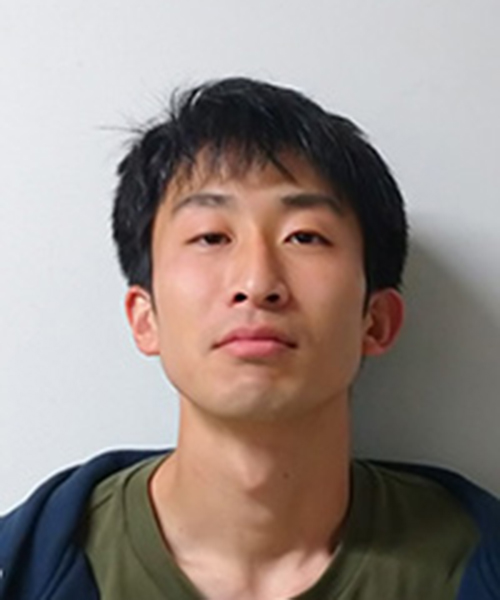 Haruka Kondo is a researcher of the Laboratory of Floriculture & Ornamentals, Chiba University, Chiba, Japan. His research focuses on orchid breeding using intergeneric hybridization. Many intergeneric hybrids of Epidendrum between other Epidendroideae, such as genus Cattleya, Barkeria and Brassavola, have been artificially bred. However, intergeneric hybrids or later generations are usually partially or completely […]28 February 2023
 -
 Dr. Jie Gao, a recent Ph. D. graduate, is an associate professor at the Environmental Horticulture Research Institute, Guangdong Academy of Agricultural Sciences, China. The objective of her study focused on the molecular regulation mechanisms of Chinese orchid, Cymbidium sinense, leaf variegation. The Chinese orchid is a symbol of elegance and purity in China. Among […]28 February 2023
 -
 In Citrus, flower intensity could be partially reduced or increased by applying gibberellins (GA3) or paclobutrazol (PBZ). However, under extreme harvest conditions, very high or very low treatments of these chemicals do not have any effect. Fruit inhibits flowering by activating CcMADS-box19 gene expression in the leaf, which blocks the inductive signalling preventing the expression […]28 February 2023
 -
 In the Laboratory for Flavours and Metabolites of the Laimburg Research Centre (Autonomous Province of Bolzano, Italy), our working group is investigating the degradation products of chlorophyll in methanolic extracts of plant leaves and peels of apple fruits. These so-called phyllobilins (PB) are studied using high resolution mass-spectrometry in an untargeted approach, after previously monitoring […]28 February 2023
 -
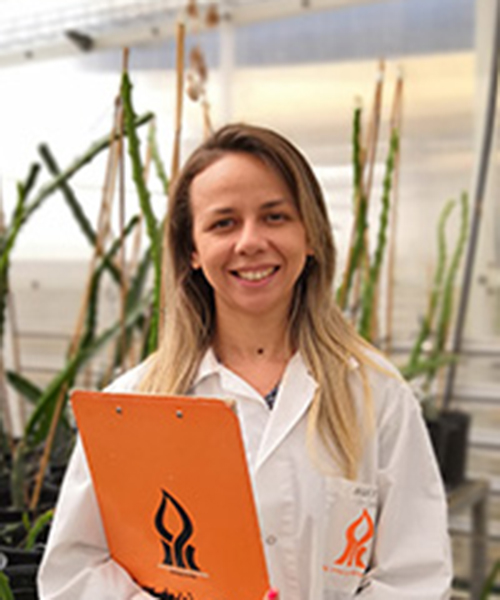 Dr. Milena Oliveira holds a PhD in Agronomy from the Federal University of Ceará (UFC), an MSc in Plant Physiology from the Federal University of Viçosa, and a BSc in Agronomy Engineering from UFC, Brazil. Currently, she is a postdoctoral researcher at Ben-Gurion University of the Negev (BGU), Israel, under the supervision of Prof. Noemi […]28 February 2023
 -
 Tomato is the main horticultural crop for processing industry. Tomato puree is a source of phytonutrients such as carotenoids. Puree viscosity is a major quality trait, and industrial companies need reliable indicators of tomato fruit ability to produce viscous puree. Fruit quality is primarily assessed by measuring the soluble solid content, which is insufficient to […]28 February 2023
 -
 Sijia Chen is a PhD candidate working on the effect of light spectrum on the fruit set of sweet pepper (Capsicum annuum L.), at the Horticulture and Product Physiology Department, Wageningen University (The Netherlands). She studies under the supervision of Dr. Ep Heuvelink, Professor Leo Marcelis, and Professor Remko Offringa. She found that the fruit […]28 February 2023
 -
 Wounding is a fundamental factor effecting the survival of woody cuttings for plant propagation. Adventitious rooting is directly related to mechanical damage as a result of plant detachment. In this sense, methods of manipulating wounded regions to stimulate adventitious roots have most frequently been applied to hardwood species. Our first experiments investigating the role of […]28 February 2023
 -
 Aleksandra Korićanac is a PhD student at the University of Belgrade, Faculty of Agriculture, and a Research Assistant at the Fruit Research Institute, Čačak, Serbia. Her research is largely focused on fruit quality changes during ripening, harvest, storage, and postharvest management of temperate zone fruit species, particularly plums. Little is currently known about how European […]6 January 2023