
Tomato (Solanum lycopersicum L.) is one of the most widely grown warm season vegetable crops for both fresh consumption and processing. The present study aims to evaluate tomato leaf curl disease (ToLCD) resistant genotypes for processing. In this study, a set of 46 genotypes, including a control (‘Punjab Chhuahra’), were evaluated for resistance to disease and fruit quality traits through gene linked markers and phenotyping. To identify superior processing traits among the selected genotypes, fruit quality parameters like TSS (ºBrix), pH, acidity (%), pericarp thickness (mm), fruit shape index (FSI), viscosity (cP), number of locules, firmness (kg cm-2), juice recovery (%), and paste recovery (%) from fruits of all the genotypes were studied. Paste samples were prepared and subjected to analysis of minerals, phytonutraceutical content (lycopene and beta carotene) and biochemical components (ascorbic acid, titratable acidity, total phenolic content, total antioxidant activity, total flavonoid content). Two genotypes, Pusa Tomato Hybrid-6 (PTH-6) and DTH-162, had superior processing quality traits along with multiple disease resistant genes, Ty-3 and Ph-3 for tomato leaf curl disease (ToLCD) and late blight, respectively, compared to the control. Genotypes having promising processing quality with high recovery rates were identified among the evaluated genotypes: PTH-6 had high yield (986.7 q ha-1), juice recovery (84.3%), puree and paste recovery (37.2 and 16.7%, respectively) and was found to be the most promising for either market. Among the selected genotypes with excellent fruit quality and processing attributes were: DTK-128 with fewer locules (2), DTK-91 for its superior firmness (6.0 kg cm-2), DT-396 for a thick pericarp (9 mm), DTK-103 for its FSI of 1.9, DT-904115 with a TSS of 5.2 °Brix, and DTK-1 (SPS-6) for high viscosity (61.4 cP). Paste samples with superior biochemical properties included PTH-6 for high lycopene content (15.8 mg 100 g-1), Punjab Chhuhara for beta carotene (4.4 mg 100 g-1), DTK-134 for titratable acidity (1.2 mg 100 g-1), DTK-135 for high ascorbic acid content (78.0 mg 100 g-1), DT-411-1-6-11-15(27) for high total antioxidant activity (505.5 µmol Trolox 100 g-1) and total phenolic content (167.0 mg 100 g-1), and DTK-117 with the highest flavonoid content (142.3 mg 100 g-1).
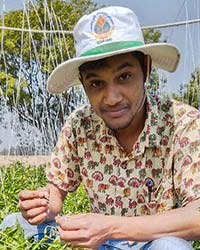
Balkrishna Nayak won the ISHS Young Minds Award for the best poster presentation at the X International Scientific and Practical Conference on Biotechnology as an Instrument for Plant Biodiversity Conservation (physiological, biochemical, embryological, genetic and legal aspects) in India in November 2024.
Balkrishna Nayak, Vegetable Science, ICAR-IARI, New Delhi, 110012, e-mail: balkrishnanayak666@gmail.com
The article is available in Chronica Horticulturae