
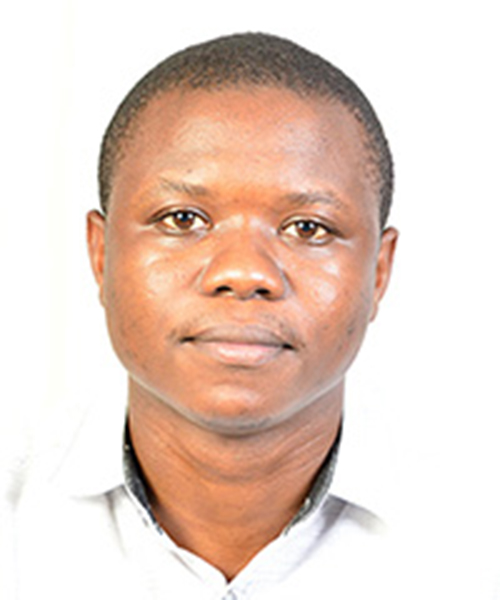
Kenneth Oduor is a Ph.D. Student in the Agronomy Department at the University of Florida Institute of Food and Agricultural Sciences (IFAS), under the supervision of Professor Jose Dubeux. He holds an MSc in Agronomy (2016) and a first-class honors degree in BSc. in Agricultural Education and Extension (2013), from the University of Nairobi (Kenya), where he received a scholarship award for his master’s degree. His research focused on strategies to reduce the spread of the invasive cactus species Opuntia stricta in Kenya. This includes using the plant to produce biogas, organic fertilizer, and livestock feed supplement. Concurrently, he is evaluating biomass accumulation and the root contribution of the plant to the below-ground ecosystem. This study was part of his initial experiments that explored the potential to optimize biogas production from cactus feedstock using cattle manure. Different levels of manure inclusion were evaluated for total gas, nitrogen, carbon, carbon isotopes, and pH. The goal was to identify the best treatment combinations to enhance biogas production for a pilot study at the community level. The highest total gas was recorded with the inclusion of 20% manure signifying a 43% increase compared to treatment with no cattle manure. Similarly, treatments with manure had higher pH values that favored methanogen activity. The C/N ratio reduced with each level of manure inclusion, enhancing microbial nutrition for increased biogas production. Based on the results, co-digestion with cattle manure represented a valuable technique to optimize biogas production from cactus feedstock while contributing to its management. Currently, Kenneth is conducting more extended incubation experiments to identify other ways of optimizing incubation parameters that enhance the amount of methane from the cactus feedstock.
Kenneth Tembe Oduor won the ISHS Young Minds Award for the best poster presentation at the X International Congress on Cactus Pear and Cochineal in Brazil in September 2022.
CKenneth Tembe Oduor, Department of Agronomy, Institute of Food and Agricultural Sciences (IFAS), North Florida Research and Education Center (NFREC), University of Florida, 3925 Highway 71, Marianna, FL 32446, USA, e-mail: kenneth.oduor@ufl.edu
The article is available in Chronica Horticulturae