
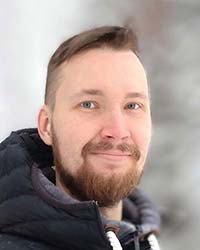
The genetic diversity of trees is most often conserved in situ at their natural growing sites by establishing conservation areas or gene reserve forests. However, for endangered species, additional methods are often warranted. Ulmus laevis (Pall.) and Ulmus glabra (Huds.) are two native elm species in Finland. Both species are endangered and globally affected by the Dutch elm disease. Due to the scattered distribution of the natural populations of U. laevis and U. glabra in Finland, their genetic diversity has been conserved in field genetic reserve collections, which consist of grafted elms from the natural population. In these collections, trees are able to produce more diverse and adaptable seed. However, field collections are vulnerable to abiotic hazards, pests and pathogens, like Dutch elm disease. While Dutch elm disease is not currently present in Finland, it is likely to spread in the future due to a warming climate. Because of the pathogen threat, supplementary static conservation through cryopreservation of dormant buds has been implemented. The buds are regenerated from cryostorage through tissue culture. The development of protocol has involved testing different surface sterilization methods, subculture techniques and media. U. laevis can be cryopreserved with controlled slow cooling and minimal pre-treatments, but dormant buds of U. glabra require a dehydration treatment, which improves the sterilization outcome and regeneration rate. The cryocollection currently houses 116 U. laevis and 45 U. glabra genotypes. Sakari Välimäki is currently a research scientist at Natural Resources Institute Finland (Luke) in Savonlinna. He recently defended his dissertation titled “Tissue culture and cryopreservation in the utilization and conservation of genetic resources of Norway spruce (Picea abies) and elms (Ulmus glabra, U. laevis)” at the University of Helsinki.
Sakari Välimäki won the ISHS Young Minds Award for the best oral presentation at the IV International Symposium on Plant Cryopreservation in Norway in June 2023.
Sakari Välimäki, Natural Resources Institute Finland (Luke), Vipusenkuja 5, 57200 Savonlinna, Finland, e-mail: sakari.valimaki@luke.fi
The article is available in Chronica Horticulturae